
Practical Electrical Maintenance • Safe Isolation • Testing • Certification
Minor Electrical Works Training Course for Maintenance Teams
A practical 1½-day electrical training course for maintenance teams, facilities personnel, estates staff and multi-skilled engineers who undertake defined minor electrical maintenance and like-for-like replacement work within their assessed level of competence.
Learn how to work safely on dead low-voltage circuits, carry out safe isolation, recognise electrical hazards, undertake appropriate basic inspection and testing, understand test results and correctly complete Minor Electrical Installation Works Certificates where appropriate.
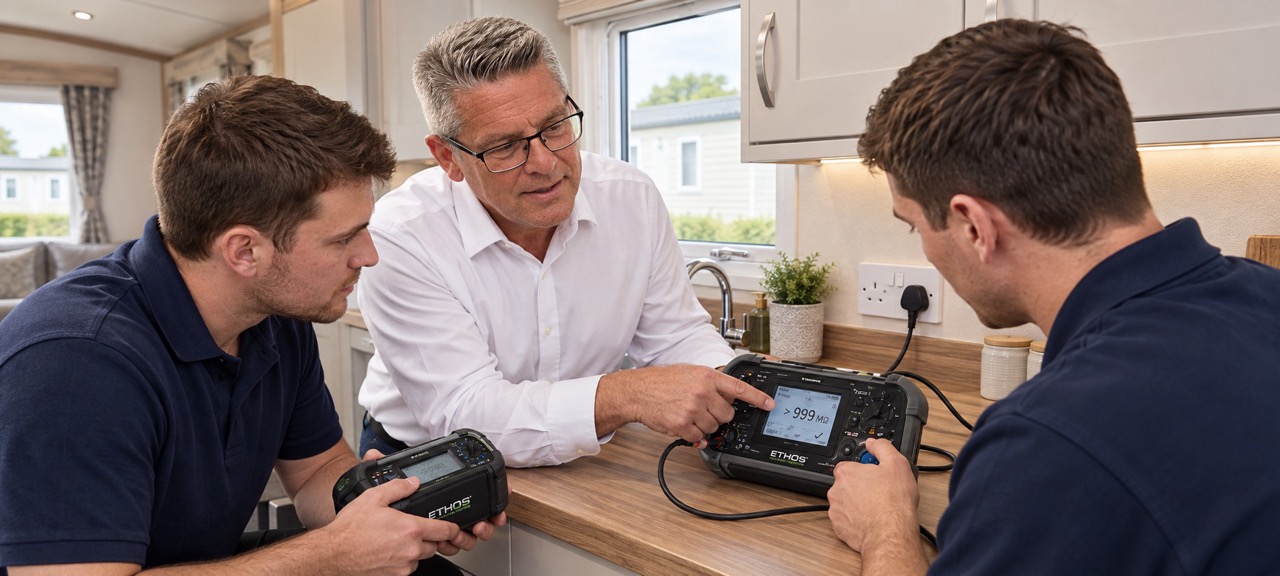
Electrical Skills for Real Maintenance Teams
Move Beyond Electrical Awareness and Develop Practical Minor Works Skills
Maintenance teams are frequently asked to deal with relatively small electrical tasks as part of the normal operation of buildings, estates, factories, holiday parks, workshops and commercial facilities.
Replacing a damaged socket outlet, switch, luminaire, fused connection unit or other electrical accessory may appear straightforward, but even apparently simple electrical maintenance requires the person carrying out the work to understand the hazards involved, safely isolate the correct circuit and verify that the completed work is safe.
The SJB Electrical Training Minor Electrical Works Training Course has been developed specifically for suitably experienced maintenance personnel who need greater practical electrical capability without undertaking a full electrician training programme.
The 1½-day programme combines electrical safety, legislation, BS 7671:2018+A4:2026, safe isolation, practical maintenance exercises, inspection, basic electrical testing and completion of electrical documentation.
A key part of the course is also understanding when not to continue. Delegates learn to recognise the limits of minor electrical maintenance and when defects, unexpected results or the scope of work should be escalated to a more experienced electrical professional.

Practical Electrical Training
Learn the Process — Not Just the Theory
Minor electrical work is a practical activity, so this course contains a strong hands-on element.
Delegates work through realistic electrical maintenance scenarios, learning how to approach a job methodically from initial assessment and safe isolation through to replacement, inspection, testing and documentation.
- Assessing the task before work starts
- Identifying the correct electrical circuit
- Safe isolation and secure lock-off
- Using appropriate voltage indicators and proving devices
- Proving conductors dead before work starts
- Removing and replacing electrical accessories
- Checking conductor condition and terminations
- Basic inspection following completed work
- Using appropriate electrical test equipment
- Understanding whether results appear acceptable
- Completing appropriate electrical documentation
- Recognising when work must be escalated
Who Should Attend?
Minor Works Electrical Training for Maintenance & Facilities Teams
This is an up-skilling course for personnel who already undertake maintenance activities and require additional knowledge and practical skills for clearly defined low-voltage electrical maintenance tasks.
Maintenance Teams
Develop appropriately experienced maintenance staff who encounter simple electrical replacement and repair work as part of their role.
Facilities Teams
Practical electrical skills for facilities personnel maintaining commercial buildings, schools, estates, warehouses and workplaces.
Multi-Skilled Engineers
Strengthen safe-isolation, testing and certification knowledge for engineers whose duties include defined electrical maintenance.
Caravan & Holiday Parks
Develop maintenance personnel responsible for accommodation, facilities, buildings and appropriate day-to-day electrical tasks.
Historic Estates
Training for estate and property-maintenance teams responsible for maintaining electrical accessories and building services.
Commercial & Industrial Sites
Suitable for organisations wanting clearly defined electrical responsibilities within wider maintenance roles.
Understanding the Scope
What Do We Mean by Minor Electrical Works?
The term minor electrical works should not be used to suggest that electrical work is automatically low risk or that any maintenance employee can undertake it.
For this course, the focus is on defined electrical maintenance tasks undertaken by personnel who have been appropriately trained, assessed and authorised by their employer for the work concerned.
Typical workplace examples may include appropriate replacement of existing electrical equipment such as:
Socket Outlets
Replacement of an existing accessory with an appropriate equivalent where the circuit and installation are suitable.
Switches
Safe removal and replacement of suitable existing switching accessories on an identified circuit.
Lighting Accessories
Defined replacement of appropriate luminaires and associated accessories within the delegate’s authorised scope.
Fused Connection Units
Understanding connection, protection, conductor identification and safe replacement principles.
Damaged Accessories
Recognising damage, deterioration, overheating or unsafe conditions before deciding whether work can safely continue.
Defined Maintenance Tasks
Other appropriate tasks may be included where they fall within company procedures and the individual’s assessed competence.
Electrical Safety & Compliance
Understand Why Safe Electrical Maintenance Is a Legal Responsibility
Delegates are introduced to the legal and technical framework that sits behind electrical maintenance and safe systems of work.
Electricity at Work Regulations 1989
Understand duties relating to electrical systems, maintenance, isolation, safe working and competence.
Health and Safety at Work etc. Act 1974
Understand the wider responsibility to manage workplace risks and protect employees and others affected by work activities.
BS 7671:2018+A4:2026
Understand how the current IET Wiring Regulations influence electrical alterations, replacement work, inspection, testing and certification.
Competence & Supervision
Understand why electrical competence depends on the particular task, knowledge, training, experience and appropriate supervision.
Work Dead — Work Safely
Safe Isolation Is at the Heart of the Course
The SJB Minor Electrical Works course is based around safe working on correctly isolated dead circuits.
Delegates learn why switching something off is not the same as proving that it is safe to work on and why electrical isolation must be planned, secured and verified.
Identify
Correctly identify the equipment, circuit and potential sources of electrical energy before isolation begins.
Isolate & Secure
Understand correct isolation, lock-off, warning arrangements and control of the isolation point.
Prove Dead
Understand appropriate voltage-detection equipment, proving devices and verification that the circuit is dead at the point of work.
1½-Day Programme
What Does the Minor Electrical Works Course Cover?
Electrical Safety, Safe Isolation & Practical Minor Works
- Electrical shock, burns, arcing and fire hazards
- Electricity at Work Regulations 1989
- Health and Safety at Work responsibilities
- Understanding electrical competence
- BS 7671 and current Amendment 4 requirements
- Risk assessment and safe systems of work
- When electrical work should be carried out dead
- Identifying circuits and isolation points
- Safe isolation procedures
- Lock-off and prevention of re-energisation
- Voltage indicators and proving devices
- GS38 test equipment awareness
- Earthing and protective conductors
- Basic circuit arrangements
- Protective devices and RCDs
- Conductor identification
- Accessory selection and suitability
- Replacing switches and socket outlets
- Lighting and suitable replacement accessories
- Fused connection units and similar equipment
- Checking terminals and conductor condition
- Recognising overheating, damage and deterioration
- Practical safe-isolation exercise
- Practical minor-works replacement exercises
Inspection, Basic Testing, Results & Minor Works Certification
- Why electrical work needs inspection and testing
- Visual inspection following completed work
- Basic electrical test instrument awareness
- Continuity and protective conductor checks
- Polarity verification
- Insulation resistance principles
- Earth fault loop impedance awareness
- RCD protection and testing awareness
- Understanding recorded test results
- Recognising unexpected or unsafe results
- When testing is outside the delegate’s competence
- Purpose of a Minor Works Certificate
- When Minor Works documentation may be appropriate
- Recording the work undertaken
- Recording circuit information
- Recording inspection and test information
- Comments and defects in the existing installation
- Understanding the declaration being signed
- Document retention and traceability
- When an Electrical Installation Certificate is required instead
- When to stop and escalate work
- Practical testing exercise
- Minor Works certificate exercise
- Knowledge and practical assessment
Inspection & Basic Testing
Understand What You Are Testing — and Why
Electrical testing should never become a process of simply connecting a multifunction tester and copying numbers onto a certificate.
Delegates are introduced to the purpose behind appropriate tests and checks so that they can understand what the result is intended to demonstrate.
Protective Conductors
Understand why continuity of the protective conductor matters and its role in electrical safety.
Polarity
Understand why correct polarity needs to be confirmed following electrical work.
Insulation
Understand the purpose of insulation resistance testing and why inappropriate testing can damage connected equipment.
Loop Impedance
Introduce the relationship between fault-loop impedance, protective devices and automatic disconnection.
RCD Protection
Understand the purpose of residual current protection and the significance of appropriate verification.
Interpret Results
Develop the confidence to recognise when a result looks wrong and work should stop rather than simply recording the number.
Electrical Certification
Learn How to Complete a Minor Electrical Installation Works Certificate
A Minor Electrical Installation Works Certificate is more than paperwork completed after a job.
The person signing it is recording information about the work, the circuit, the existing installation, inspection, testing and the safety of the completed work.
Delegates work through the current certificate structure and learn how the information connects to the physical work they have undertaken.
Description of the Work
Clearly identify what was changed or replaced, where the work took place and the existing circuit affected.
Existing Installation
Understand why defects, earthing arrangements and the condition of the existing installation cannot simply be ignored.
Circuit Information
Identify the circuit, protective device, conductor information and relevant protective arrangements.
Test Results
Understand where appropriate inspection and test results are recorded and why they need to make sense.
The Declaration
Understand what the person signing the certificate is declaring about the work, inspection, testing and safety of the installation.
Records
Understand why certificates should be retained and made available for future maintenance, alterations and inspection.
Competence Includes Knowing When to Stop
Recognise When Minor Works Become More Than Minor
One of the most important learning outcomes is recognising when an apparently straightforward maintenance job has identified a problem outside the individual’s authorised scope or level of competence.
Unexpected Test Results
If measured values are unexpected, inconsistent or cannot be properly interpreted, work should be escalated rather than guessed.
Existing Defects
Damage, overheating, unsuitable protective devices, earthing problems or deteriorated wiring may require further investigation.
Scope Has Changed
If the task develops into circuit alteration, new circuit work, distribution equipment changes or other more complex work, additional competence may be required.
Unable to Isolate Safely
If the correct source cannot be positively identified, isolated, secured and proved dead, the work does not proceed.
Installation Condition
Existing installation conditions may make a simple replacement unsuitable without further assessment or remedial work.
Beyond Authorisation
Delegates learn that company authorisation and individual competence define what work they are permitted to undertake.
Clear Limits of Competence
This Course Develops Maintenance Skills — It Does Not Create an Electrician in 1½ Days
The programme has deliberately been designed around the work that appropriate maintenance personnel may realistically be expected to undertake within controlled workplace procedures.
It is not a substitute for an electrical apprenticeship or broader electrical installation qualification and does not automatically authorise a delegate to undertake every type of electrical work.
Following training, employers should consider the individual’s previous knowledge, experience, demonstrated practical ability, the work they are expected to undertake and the systems on which they will work before defining their authorised responsibilities.
Benefits for Employers
Develop Safer, More Capable In-House Maintenance Teams
Improve Safety
Give maintenance personnel a structured method for approaching electrical work rather than relying on informal workplace habits.
Reduce Unnecessary Call-Outs
Appropriate in-house capability can allow simple, defined maintenance tasks to be managed without automatically outsourcing every electrical accessory replacement.
Improve Documentation
Help maintenance teams understand when work needs documenting and what electrical records mean.
Improve Fault Recognition
Staff become better equipped to identify electrical deterioration, damage and conditions that require specialist attention.
Define Responsibilities
Establish clearer boundaries between routine maintenance, authorised minor works and electrical work that requires escalation.
Build Confidence
Practical exercises allow delegates to repeatedly apply the principles learned in the classroom.
UK-Wide Minor Works Training
Practical Electrical Maintenance Training Across Industry
Entry Requirements
Who Is Suitable for Minor Electrical Works Training?
This programme is intended as practical up-skilling for maintenance personnel rather than first-contact electrical-awareness training.
Delegates should normally have practical maintenance experience and be comfortable working with tools, equipment and building-services systems. Previous electrical knowledge is beneficial.
Where delegates have little or no electrical knowledge, SJB can advise whether Competent Person / electrical foundation training should be completed first.
Practical Assessment
Demonstrate the Process, Not Just the Answers
Delegates are assessed through knowledge checks and practical exercises covering the core activities taught during the programme.
- Electrical hazard and legislation knowledge
- Safe-isolation practical exercise
- Correct use of appropriate isolation equipment
- Practical accessory replacement exercise
- Visual inspection of completed work
- Basic electrical testing exercise
- Interpretation of test information
- Minor Works Certificate exercise
- Fault recognition and escalation scenarios
- Final knowledge assessment
SJB Electrical Training Certificate
Successful delegates receive an SJB Electrical Training Minor Electrical Works Course Certificate confirming completion of the programme and assessment.
Course Delivery
1½-Day Minor Electrical Works Training — Classroom & On-Site
SJB Electrical Training can deliver the programme through scheduled course dates or as dedicated company training for maintenance and facilities teams.
For suitable group courses, on-site delivery can allow the discussion and practical exercises to relate more closely to the equipment, procedures and responsibilities encountered in the delegates’ own workplace.
1½ Days
A full practical training day followed by a focused half-day covering testing, documentation and assessment.
Small-Group Practical Learning
Practical exercises, electrical accessories, isolation equipment, test instruments and realistic workplace scenarios.
UK-Wide Delivery
Scheduled regional courses plus suitable dedicated on-site programmes for companies and larger maintenance teams.
Progressive Electrical Training
Build the Right Level of Competence for Each Role
Managers & Supervisors
One-day management course covering legal responsibilities, EICRs, Minor Works certificates, competence and management of electrical maintenance.
Minor Electrical Works
This 1½-day practical programme develops safe-isolation, defined maintenance, testing and Minor Works certification skills.
Inspection & Testing
Suitable experienced personnel can progress to the 4-day Electrical Inspection & Testing course covering more extensive practical testing and EICR inspection.
Related SJB Electrical Training
Continue Your Electrical Training
Frequently Asked Questions
Minor Electrical Works Training FAQs
What is the SJB Minor Electrical Works Training Course?
It is a practical 1½-day electrical training programme for appropriately experienced maintenance and facilities personnel who need to undertake defined minor electrical maintenance, safe isolation, appropriate basic testing and Minor Works certification within their assessed level of competence.
Is the course suitable for maintenance teams?
Yes. The programme has been developed specifically around the requirements of maintenance, facilities, estates and multi-skilled personnel rather than being a shortened electrician apprenticeship.
Does the course teach safe isolation?
Yes. Safe isolation, secure lock-off, suitable voltage detection, proving dead and safe working on dead electrical circuits form a major practical part of the programme.
Does the course cover like-for-like electrical replacement?
Yes. The course considers appropriate replacement of existing accessories and equipment such as switches, socket outlets, luminaires and fused connection units where that work falls within the individual’s assessed competence and company authorisation.
Does like-for-like replacement mean no testing is required?
No. Delegates learn that electrical replacement work still requires appropriate inspection and testing to confirm that the completed work is safe and has not impaired the safety of the existing installation.
Does the course include electrical testing?
Yes. Delegates are introduced to appropriate practical testing and the purpose of continuity, polarity, insulation, loop-impedance and RCD-related checks relevant to defined minor electrical work.
Will delegates learn to complete a Minor Works Certificate?
Yes. Delegates work through Minor Electrical Installation Works documentation, including work description, existing installation information, circuit details, relevant test results and the declaration being signed.
When should a Minor Works Certificate be used?
Minor Works documentation is intended for appropriate additions or alterations to an existing circuit that do not include the provision of a new circuit. It may also be used for certain replacement accessories or luminaires. More extensive work may require an Electrical Installation Certificate.
Does completing the course make someone a qualified electrician?
No. The course provides structured training and practical assessment for defined minor electrical maintenance activities. Competence remains task-specific and employers must consider training, experience, practical ability, supervision and the work being undertaken before authorising an individual.
Is this a City & Guilds qualification?
No. This is an SJB Electrical Training practical skills course specifically developed for workplace maintenance teams. Delegates requiring formal electrician or inspection-and-testing qualifications should follow the appropriate recognised qualification pathway.
Can the course be delivered at our workplace?
Yes. Dedicated on-site company courses can be discussed where suitable facilities are available. Training can also be related to the type of electrical maintenance undertaken by your own team.
Isolate • Replace • Inspect • Test • Record
Give Your Maintenance Team the Skills to Carry Out Defined Minor Electrical Work More Safely
Develop practical safe-isolation, minor-works, testing and certification skills while giving your team a clear understanding of their limitations and when electrical work needs to be escalated.
1½-Day Minor Electrical Works Training Course
Contact SJB Electrical Training for individual places, group pricing and UK-wide on-site course options.

IET On-Site Guide · 9th Edition
View on Amazon
Stanley clear wraparound safety glasses
View on Amazon
Wera insulated torque screwdriver set
View on AmazonAd · SJB may earn commission from these links. As an Amazon Associate I earn from qualifying purchases.

Build your knowledge before your course
Explore the related online reading, workbooks and learning activities.
Electrical Science
Voltage, current, resistance, power and energy.
Explore this moduleEarthing and Protection
Earthing, bonding and electrical protection.
Explore this moduleCircuits and Systems
Circuit paths, switching and common arrangements.
Explore this moduleInspection, Testing and Commissioning
Inspection, test purposes and useful records.
Explore this moduleElectrical Installation Foundations
Installation principles and safe working boundaries.
Explore this module