
We use cookies to optimize your experience, analyze traffic, and personalize ads. Please choose whether you accept our use of non-essential cookies. Read More
York
08:00 AM - 05:00 PM
Last Updated: September 2, 2026
Electrical incidents remain a leading cause of workplace injury and death in commercial and industrial facilities. As a facilities manager, you’re responsible for ensuring your team works safely around electrical systems. The difference between a trained and untrained team often comes down to whether people understand the hazard and know what to do when they encounter it.
Electrical compliance training for facilities managers closes the gap between generic health and safety training and practical competency on site. It equips your maintenance staff to recognise electrical risks, follow safe systems of work, and comply with regulations governing electrical safety.
Under the Electricity at Work Regulations 1989, you have a statutory duty to ensure electrical systems are maintained safely and that anyone working with or near electrical equipment is competent to do so. This applies whether you’re managing a hospital, caravan park, industrial facility, or office building. The real challenge is implementing training that actually changes how your team behaves on site.
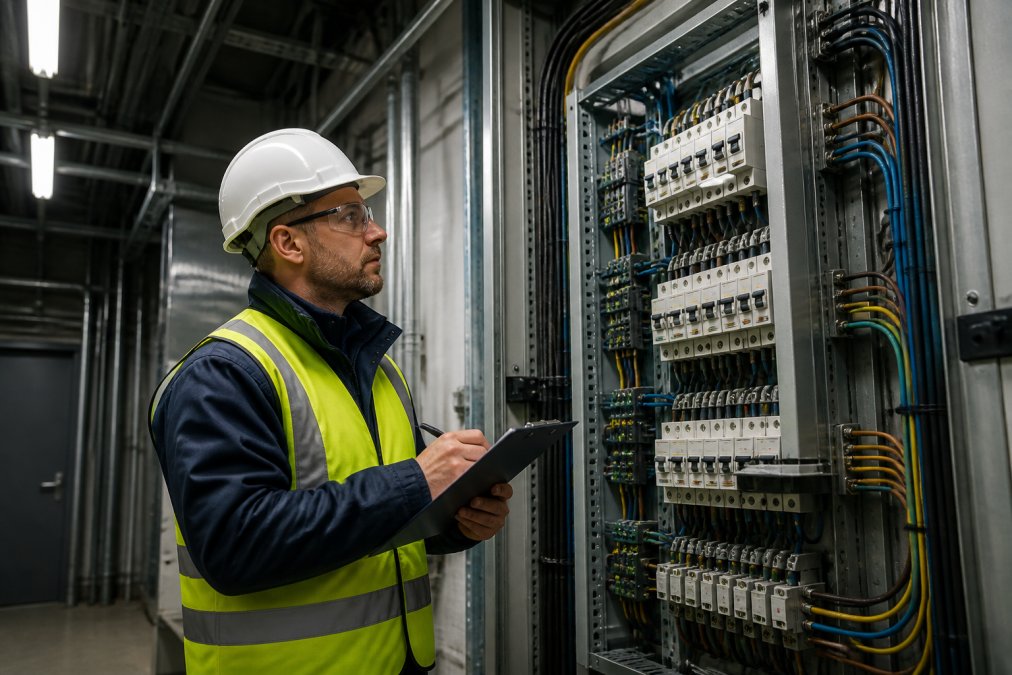
Under the Electricity at Work Regulations 1989 and the Health and Safety at Work etc. Act 1974, you’re classified as a duty holder responsible for ensuring electrical safety in your workplace. This doesn’t mean you must be an electrician, it means ensuring anyone working with electrical systems is competent, the electrical installation is maintained safely, and safe systems of work are in place.
The HSE provides guidance through HSG47 (Avoiding Danger from Live Electricity) and GS6 (Avoidance of Danger from Electricity), which define competency and safe systems of work. Your legal duty covers ensuring the electrical installation is safe through regular testing and maintenance, anyone working on or near electrical equipment understands the risks, documented safe systems of work exist and are followed, and records of training, testing, and maintenance are kept to demonstrate compliance.
Many facilities managers think this requires hiring external electricians for everything. However, your maintenance team needs to understand electrical hazards even if they’re not doing repairs. They need to know when to isolate equipment, how to verify isolation, and what to do in emergencies. Electrical compliance training for facilities managers bridges this gap between legal requirement and practical safety.
A proper risk assessment identifies the specific hazards your team faces: the type of electrical systems in your facility (low voltage, high voltage, overhead lines, underground cables), the tasks your team performs (maintenance, testing, isolation, emergency response), and the environment (wet areas, explosive atmospheres, outdoor work).
Once hazards are identified, you can determine what level of training and competency your team needs. A hospital’s basic maintenance team needs different training than a team working near overhead power lines in a caravan park. The assessment drives the training decision.
Common overlooked hazards include hidden cables in walls, overhead lines outside buildings, and live equipment that appears isolated. Many incidents occur because someone didn’t know the hazard existed or didn’t understand its seriousness.
Safe isolation is the foundation of electrical safety. When working on electrical equipment, you must isolate it from the power source and verify that isolation before anyone touches it.
The process involves: identifying the correct isolator, switching it off and securing it in the off position (often with a padlock), using a voltage detector to confirm the equipment is no longer live, testing the voltage detector itself to ensure it’s working, and keeping the isolator secured until work is complete.
Many teams skip steps three and four, assuming isolation is complete without testing. A voltage detector is a simple tool, but it must be used correctly. You need to know what voltage you’re testing for, how to hold the detector, and how to interpret results. The detector must be tested regularly to ensure it functions properly.
Safe isolation procedures are covered during electrical compliance training and tested during competency assessment, including hands-on practice with voltage detectors and actual isolation scenarios.
Preventative maintenance keeps electrical systems safe and catches problems before they cause failures or incidents. Inspection and testing frequency depends on equipment type, usage, and environment. Portable appliances in a hospital might need testing every 6 months; fixed installations in a low-risk office might be tested every 5 years.
Your risk assessment should define inspection and testing schedules for all electrical equipment. A competent person (often an external electrician) conducts formal testing, but your maintenance team should perform regular visual inspections, looking for damaged cables, loose connections, water ingress, or signs of overheating.
Training clarifies the distinction between visual inspection (which trained maintenance staff can do) and electrical testing (which usually requires a qualified electrician).
HSG47 training covers fundamental knowledge every person working with or near electrical equipment needs: electrical hazards, recognising them, safe systems of work, and emergency response. This is the baseline for all facilities managers and maintenance staff, typically taking 1-2 days.
GS6 training covers technical compliance and testing procedures, including standards for electrical installations (BS7671 Wiring Regulations), how to test and inspect systems, and required documentation. GS6 is more relevant for facilities managers overseeing electrical installations or supervising electricians, also typically 1-2 days.
Some providers offer combined HSG47 and GS6 programmes over 2 days. A small facilities team managing basic maintenance might only need HSG47; a larger team overseeing installations would benefit from both.
Content should include practical elements. Hands-on practice with voltage detectors, isolation procedures, and real equipment makes training stick and reveals gaps in understanding.
Training alone doesn’t prove competency. Assessment, a mix of written tests and practical demonstrations, verifies that people understand electrical hazards, know safe systems of work in your facility, can perform key tasks like safe isolation and voltage testing, and know when to call a specialist.
A well-designed assessment should be challenging enough to identify people who aren’t ready but achievable for anyone engaged with training. Professional development doesn’t stop after initial training. Refresher training every 1-3 years keeps knowledge current, supplemented by toolbox talks on specific hazards or procedures.
A safe system of work is a documented procedure telling your team exactly what to do in specific situations: how to isolate equipment, verify isolation, use personal protective equipment, who is authorised to do what, and how to respond to emergencies. The system must be specific to your facility; generic policies don’t account for your actual electrical systems and work.
Your policy should define roles and responsibilities: who is authorised to isolate equipment, who can work on electrical systems, who supervises, and who keeps records. Clear role definition prevents confusion and ensures accountability.
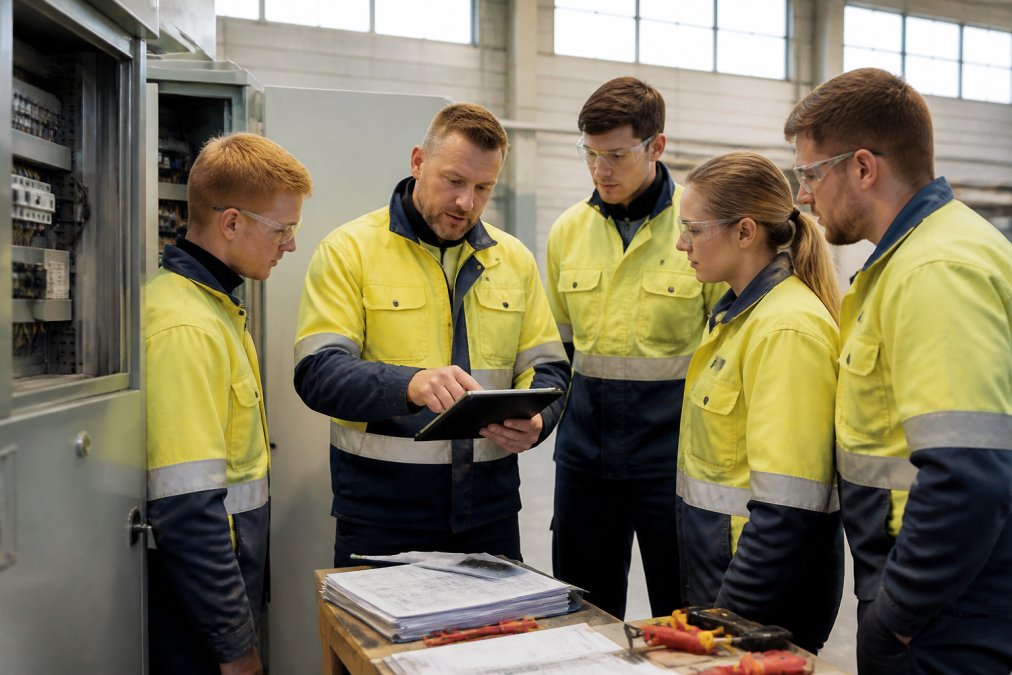
Incident reporting is the early warning system for electrical safety problems. When someone has a near-miss, shock, or unexpected live circuit, you need to know about it. Reports should capture what happened, why, and what will change to prevent recurrence. Incident reports often reveal patterns: certain equipment is repeatedly mishandled, procedures are misunderstood, or certain team members need additional training.
Compliance monitoring means keeping records of training certificates, test results, maintenance schedules, incident reports, and risk assessments. These records prove to the HSE that you’re taking your duty seriously and help identify trends and improvement areas.
Digital systems make tracking easier, especially across multiple sites or large teams. A good system tracks when training expires, flags upcoming inspections, stores test certificates, and generates compliance reports. Some integrate with maintenance scheduling to prevent missed inspections.
Records must be accessible and current. An old training certificate doesn’t prove current competency. Digital systems keep compliance visible and current.
On-site training is tailored to your specific electrical systems and work processes, ideal for large teams, multiple sites, or specific hazards like overhead power lines. Training happens in the environment where your team actually works, making learning more relevant and practical elements more realistic.
The disadvantage is cost and scheduling. On-site training requires trainer travel and often requires your team to step away from work.
Classroom-based training is more cost-effective for small teams or when scheduling during quiet periods. The disadvantage is generic content that doesn’t account for your specific systems. Your team must translate training back to their facility, creating a gap between learning and practice.
Many facilities managers use a hybrid approach: classroom training for foundational knowledge, then on-site toolbox talks for specific hazards. This balances cost and relevance.
For multiple sites or large teams, scaling becomes challenging. Options include:
Train-the-trainer programmes allow you to train internal people to deliver refresher training and toolbox talks. This requires initial investment but saves money over time.
Staggered on-site training brings the trainer multiple times with different groups, spreading cost and maintaining operations.
Blended learning combines online modules for theory with on-site or classroom practical sessions, reducing time away from work.
The choice depends on team size, budget, and operational constraints. A small team might use classroom training every 2-3 years plus annual toolbox talks. A large industrial operation might combine on-site training, train-the-trainer, and digital record-keeping.
Treating training as a box-tick exercise. Collecting certificates doesn’t ensure behaviour change. If your team still doesn’t know what to do encountering a live cable, training failed. Competency assessment verifies people can actually work safely, not just recite theory.
Confusing training with competency. A certificate proves attendance, not competency. Competency means understanding risks, knowing safe systems of work in your facility, and performing key tasks correctly. Assessment is the only verification method.
Isolating training from your actual systems. Generic training is useful for foundational knowledge but doesn’t account for your specific systems, equipment, or hazards. Supplement classroom training with on-site toolbox talks addressing your actual hazards.
Forgetting refresher training. People forget. Regulations change. New equipment is installed. Refresher training every 1-3 years keeps knowledge current. Toolbox talks between formal sessions maintain awareness.
Not documenting safe systems of work. If not documented, people create their own procedures, often skipping steps. Safe systems should be written, specific to your facility, and regularly reviewed.
Failing to investigate incidents. Incidents reveal failures in your system, training gaps, procedure problems, or equipment issues. Investigating and making changes prevents future incidents.
Start with a risk assessment identifying electrical hazards your team faces, tasks they perform, and competency levels needed. This assessment drives the training decision.
Once needs are identified, choose your delivery model. Classroom-based electrical compliance training for facilities managers covers HSG47 and GS6 content. On-site delivery is more relevant for customised training. For large teams across multiple sites, combine initial training, train-the-trainer, and digital record-keeping.
Include competency assessment to verify your team understands electrical hazards and can perform key tasks safely. Use incident reports to identify training gaps and refine safe systems of work over time.
The goal is a team that confidently recognises electrical hazards, knows exactly what to do, and follows safe systems of work every time.
At SJB Electrical Training, we deliver specialist, hands-on electrical safety and compliance training across the UK, empowering contractors, maintenance teams, and industrial organisations to confidently manage risks and adhere to critical regulations like HSG47 and GS6. Our expert-led programs, including campervan design, install and testing, authorised person training and specialist AGL 1-3 for airport lighting all ensuring improved understanding of electrical risks and enhanced ability to follow safe systems of work. By focusing on duty holder competence and practical application, we help your workforce achieve compliance with wiring regulations and safety standards, fostering increased confidence when working around electrical systems.
We understand operational challenges: you can’t take everyone off-site at once, your team needs relevant training, and you need proof that training changes behaviour. Our programmes are designed around those constraints.
Book Training with SJB Electrical Training today to discuss your facility’s electrical safety needs and find the training delivery model that works for your team.
As a facilities manager, you hold duty holder responsibilities under the Electricity at Work Regulations 1989. You must ensure electrical systems are installed, maintained, and inspected safely; conduct risk assessments; provide competent supervision; and ensure staff receive appropriate electrical safety training. You’re legally accountable for preventing electrical hazards and ensuring compliance monitoring across your facilities.
Electrical safety training duration depends on your role and existing knowledge. HSG47 training typically spans 1-2 days, while combined HSG47 and GS6 programmes run for a duration that ensures proper coverage. Competent Person or Authorised Person training requires longer programmes. Refresher training is recommended every 2-3 years. On-site delivery can be tailored to your team’s schedule without disrupting operations.
Yes. The Electricity at Work Regulations require that anyone working on or near electrical systems must be competent or supervised by a competent person. Non-electrical staff who maintain basic equipment, manage electrical infrastructure, or oversee contractors must receive appropriate electrical safety training. Failure to provide this training exposes your organisation to regulatory action and liability.
A Competent Person has the knowledge, experience, and training to identify risks and prevent hazards when working with electrical systems. An Authorised Person is specifically designated to work on live electrical equipment and has additional formal training and responsibility. For most facilities managers, Competent Person status is sufficient; Authorised Person training is needed only if your role requires live work or specialist testing.
This article was written using GrandRanker
Learn what an 18th edition course for electricians covers, who needs i
Understand competent person electrical training, who needs it, what it