
We use cookies to optimize your experience, analyze traffic, and personalize ads. Please choose whether you accept our use of non-essential cookies. Read More
York
08:00 AM - 05:00 PM
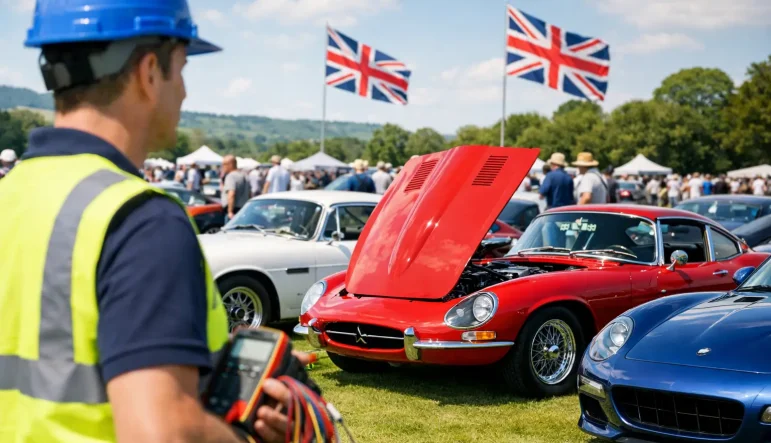
Motor shows bring together far more than polished vehicles and enthusiastic crowds. They create a meeting point for owners, technicians, traders, suppliers and future entrants to the industry. SJB Smart Electrical Training sponsors Great British Motor Shows because that environment gives practical skills, safe working standards and professional development the visibility they deserve.
For an electrical contractor and training provider, supporting a national motor-show platform is a natural fit. The motor sector is changing quickly, but its core expectations remain firm: work must be carried out competently, systems must be assessed properly, and safety must not be treated as an afterthought. Whether the conversation is about workshop infrastructure, electric vehicle charging, temporary event supplies or the people entering technical trades, informed electrical practice has a clear place in the discussion.
A well-run motor show reflects the breadth of the sector it represents. Alongside vehicles, there are specialists in restoration, diagnostics, fabrication, detailing, performance, logistics and retail. Each area depends, to differing degrees, on safe electrical systems and competent people.
This matters because electrical work is often only noticed when something goes wrong. A poorly planned installation can interrupt a workshop, restrict future equipment upgrades or create an avoidable safety concern. An inadequate understanding of electrical risk can expose employees, customers and visitors to danger. The value of professional training is not confined to passing an assessment or obtaining a certificate. It supports better decisions before work begins and safer behaviour while work is underway.
Motor shows also offer a useful public reminder that technical careers are skilled careers. Visitors may see the finished vehicle, but not always the survey work, design choices, inspection requirements and installation discipline behind the premises that support it. Sponsorship helps place that expertise in a setting where it is relevant to both experienced professionals and people considering their future in the trade.
The sponsorship connects electrical competence with a community that values practical knowledge. Great British Motor Shows can attract people with very different levels of technical experience, from private vehicle owners to established business operators. The message must therefore be clear without oversimplifying the work: electrical systems require appropriate assessment, suitable equipment and competent installation.
For commercial and industrial audiences, that message has direct operational importance. Workshops, garages, depots and vehicle preparation facilities may rely on a combination of fixed wiring, distribution equipment, lighting, extraction, machinery supplies, charging equipment and external power. These systems are not interchangeable, and neither are the risks associated with them.
A facility planning a new charging point, for example, should not assume that available wall space means the existing supply can support the installation. Load capacity, protective devices, cable routes, earthing arrangements, accessibility, future demand and the local environment all need consideration. The right approach starts with a survey, not with a product choice.
Training has an equally important role. Staff do not need to be qualified electricians to benefit from better electrical awareness. They do, however, need to understand the limits of their responsibilities, recognise unsafe conditions and know when specialist support is required. This distinction is particularly valuable in busy environments, where a small issue can be overlooked in the pressure of day-to-day work.
The shift towards electrified transport has made electrical awareness more visible, but it has not created the need for safe electrical practice. Garages and transport sites have always depended on reliable installations. What has changed is the range of systems being introduced and the consequences of getting decisions wrong.
For a small independent workshop, priorities may include compliant power provision, effective lighting and a safe route to support new equipment over time. For a larger operator, the focus may extend to capacity planning, multiple charging points, resilience, inspection schedules and coordination with wider site operations. Infrastructure organisations face another level of complexity, where public access, operational continuity and formal control procedures are central.
There is no single electrical solution for every motor-related setting. A simple installation may be appropriate for one site, while another requires a phased upgrade following detailed survey findings. The key is to match the work to actual conditions rather than assumptions.
That is where a full-service approach offers practical value. SJB Smart Electricals works across survey, installation and training requirements, helping clients move from an informed understanding of their site to properly delivered work and improved workforce capability. For customers, this can reduce the gaps that occur when assessment, delivery and training are considered as separate issues.
Good electrical training is grounded in the tasks people carry out and the environments they work in. It should not rely on generic warnings alone. A useful programme helps participants understand common hazards, follow site procedures, raise concerns correctly and avoid acting outside their competence.
In motor-related workplaces, this could include recognising damaged leads and equipment, understanding the importance of isolation procedures, keeping work areas suitable for electrical activity and knowing why unsuitable temporary arrangements create risk. It may also address how changing equipment, including charging infrastructure, affects established ways of working.
The balance matters. Training should build confidence, but it must not encourage people to undertake work for which they are not competent or authorised. Competence is built through appropriate instruction, experience, supervision and, where required, formal qualifications. Knowing when to stop and seek qualified assistance is a professional strength, not a limitation.
For employers, investment in training can support safer operations and clearer accountability. It may also help teams communicate more effectively with contractors. When staff can describe the issue, location and circumstances accurately, surveys can be more efficient and corrective work can be planned with less disruption.
Sponsoring Great British Motor Shows is not simply about brand presence at an event. It reflects a shared interest in the people, equipment and facilities that keep the motor sector moving. The best trade environments combine enthusiasm with professional standards. They celebrate craftsmanship while recognising that modern work depends on compliance, ongoing learning and responsible delivery.
That balance is especially relevant as businesses make decisions about electrification. There is understandable pressure to respond quickly to customer expectations and changing vehicle technology. However, speed should not replace proper planning. A charging installation that is poorly scoped, a rushed alteration to a distribution board or an unassessed increase in electrical demand can create costs that far outweigh the benefit of an early installation date.
A measured approach usually begins by asking practical questions. What is already installed? What condition is it in? What equipment will be used now, and what is likely to be added later? Who will use the area? What operational disruption is acceptable? These questions guide a solution that is suitable for the site rather than merely convenient on paper.
The wider value of a sponsorship is in the conversations it encourages after the event. A homeowner considering a domestic charging point, a garage owner improving a workshop, or a facilities manager planning an estate-wide upgrade all face different decisions. What they have in common is the need for sound advice before work begins.
Approved, competent providers bring more than installation capability. They can identify limitations early, explain the implications of different options and complete work with the standards expected in regulated and safety-critical settings. That is particularly important where electrical works sit alongside daily operations, public access or valuable assets.
Great British Motor Shows provide a visible platform for the motor community. Supporting that platform gives electrical training, safe installation and professional responsibility a stronger place within it. For anyone planning electrical work around vehicles, premises or charging infrastructure, the most useful next step is straightforward: start with a competent assessment, ask the right questions and build from a standard that will serve the site well for years to come.
Learn what an 18th edition course for electricians covers, who needs i
Understand competent person electrical training, who needs it, what it