
We use cookies to optimize your experience, analyze traffic, and personalize ads. Please choose whether you accept our use of non-essential cookies. Read More
York
08:00 AM - 05:00 PM
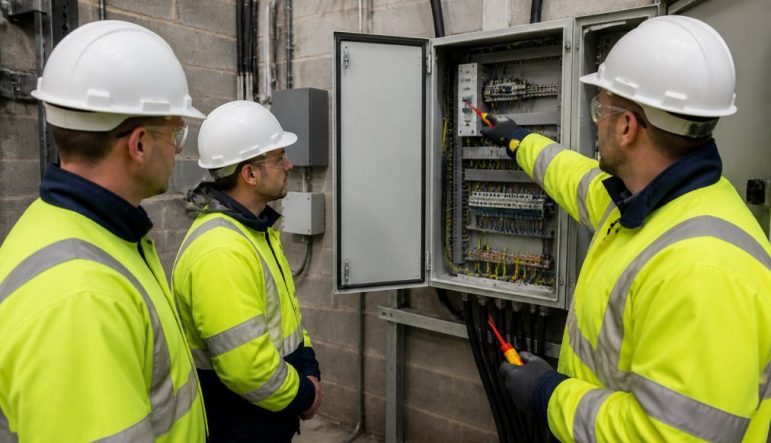
Effective on-site electrical training starts with understanding your team’s current competence, the specific electrical hazards they face, and applicable regulatory requirements. Identify which staff work near electrical systems, groundworkers, plant operators, maintenance technicians, caravan park staff, airport lighting teams, or facilities managers, as each group faces different hazards and needs different content.
Conduct a skill audit: Can your team recognise electrical hazards? Do they understand what makes something live or dangerous? Can they identify the difference between a competent person and a duty holder? Document the specific electrical risks present at your workplace, overhead power lines, underground cables, temporary electrical supplies, live equipment, as each demands different control measures and training emphasis. Finally, review your compliance obligations under the Health and Safety at Work etc. Act 1974 and relevant standards like HSG47, GS6, and BS 7671 to shape what your training must deliver.
HSG47 is the Health and Safety Executive’s guidance defining what electrical competence actually means in your workplace. Competence requires a combination of technical knowledge, practical experience, and understanding of safety principles, not a single qualification. For non-specialist staff, the focus shifts: they don’t need to become electricians, but must understand electrical hazards well enough to avoid them and know when to call a qualified electrician.
HSG47 establishes three key areas for on-site electrical training. First, it distinguishes between a competent person (qualified to work on electrical systems) and someone who works near them but isn’t qualified to touch them, your training must make this distinction crystal clear. Second, it emphasises safe systems of work: documented procedures, clear roles, supervision, and regular review. Third, it requires training be kept up to date as regulations change and new hazards emerge.
When selecting an on-site electrical training provider, verify they understand HSG47 and evidence how their curriculum addresses it. SJB Smart Electricals Training & Consultancy structures its programmes around HSG47 principles, ensuring your team develops the specific competence your workplace demands.
Generic electrical safety modules don’t work. A maintenance team in a hospital faces different hazards than groundworkers on a construction site or caravan park staff near overhead power lines. Bespoke training designed for your workplace, hazards, and team role actually changes behaviour.
Map the specific electrical tasks your maintenance team encounters: testing systems, isolating equipment, working near live circuits, replacing components. Each demands different knowledge and control measures. Include site-specific hazard scenarios using your actual workplace as examples, show the specific overhead lines near your caravan park, discuss your facility’s electrical systems, reference your organisation’s real procedures. This specificity makes training stick.
Include practical assessment within training design. Trainees should demonstrate they can identify hazards in realistic scenarios and walk through correct isolation procedures for your specific equipment. Address common mistakes and near-misses your organisation has experienced, transforming training from generic compliance into a targeted response to your actual risks.
Delivering on-site electrical training across multiple locations requires careful planning. Assess your team’s availability realistically and plan multiple sessions across different sites and shifts if necessary. Identify suitable training facilities at each site, quiet spaces where trainees can focus without interruption, and ensure you have practical equipment, PPE, isolation tools, and test equipment on site before training starts.
Plan for supervision and support during delivery. If using an external trainer, ensure your supervisory staff understand the content and can reinforce it afterwards. Deliver training during your quietest operational period to minimise disruption, ideally just before a major project where teams will face the hazards they’ve learned about. Document attendance, content covered, assessment results, and any issues that emerged to demonstrate HSG47 compliance.
Assessment proves whether training delivered genuine competence or just ticked boxes. Define what competence means in your specific context: for a groundworker, this might mean identifying overhead power lines and approach distances, understanding isolation procedures, knowing when to stop work and call a qualified electrician, and demonstrating safe systems of work.
Assessment should cover knowledge, understanding, and practical application. Include both formal assessment (written tests, practical demonstrations) and informal assessment during training. Create observable, measurable criteria: rather than “understands electrical safety,” specify “Correctly identifies three overhead power lines on site and states the correct approach distance.” Define pass/fail thresholds and what happens if someone doesn’t pass. Plan for periodic reassessment or refresher training to verify competence is maintained over time.
The difference between training that changes behaviour and training people forget within weeks is hands-on practice. Practical workstations where trainees work with realistic electrical equipment, isolate systems, identify hazards, and apply safe systems of work embed learning.
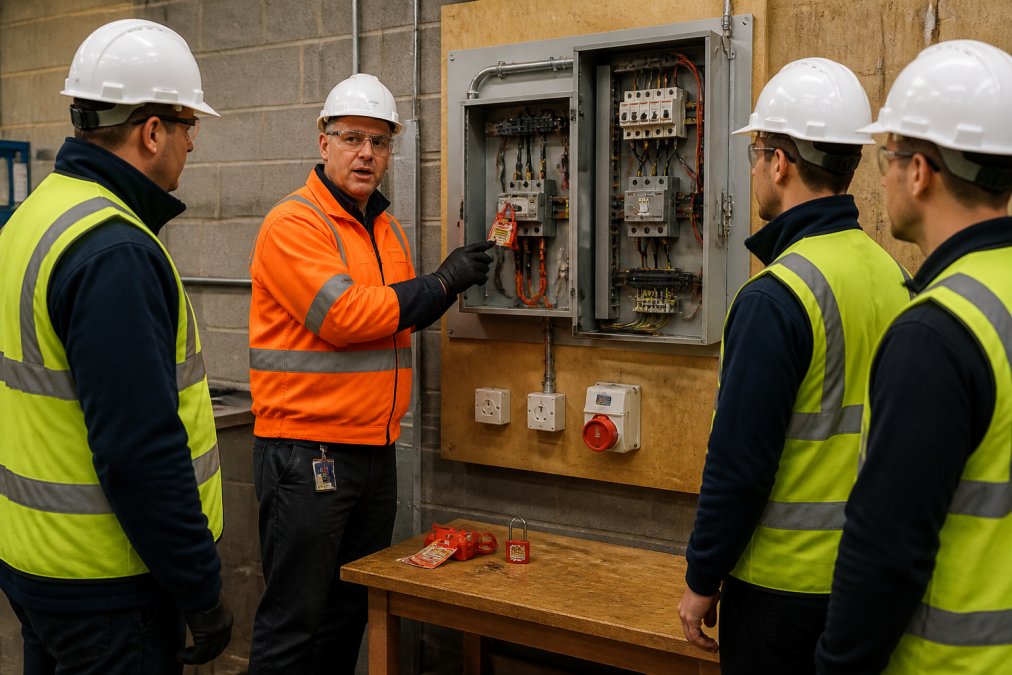
Set up practical workstations so trainees can make mistakes safely. If your team works near overhead power lines, include recognising power line markers and understanding approach distances. If they work with temporary electrical supplies, they should practice isolating and testing temporary installations. Instructor-led delivery is essential, instructors observe technique, correct unsafe practices immediately, and adapt training based on what they observe. Include peer learning where trainees work in pairs or small groups on practical scenarios. Practical assessment during hands-on training reveals whether people can actually apply what they’ve learned.
Training delivery isn’t the end point. The real measure of success is whether your team actually works more safely afterwards. Define what success looks like, zero electrical incidents, improved hazard recognition, better compliance with isolation procedures, or fewer near-misses, and establish clear criteria to measure it.

Monitor near-miss reporting: if your team starts reporting electrical near-misses after training, they’re recognising hazards they previously missed. Conduct spot checks on site to observe whether your team actually follows learned procedures. Involve supervisory staff in reinforcing training, supervisors should be trained alongside their teams and regularly reinforce key messages and correct unsafe practice. Review incidents and near-misses for competence gaps to determine whether retraining, supervision, or procedure revision is needed. Document your safe systems of work clearly so everyone understands their role in maintaining them. Consider periodic refresher training annually or biennially to keep competence current.
| Monitoring Activity | Frequency | What It Reveals |
|---|---|---|
| Incident investigation | As needed | Competence gaps, procedure failures, system weaknesses |
| Near-miss reporting review | Monthly | Hazard recognition improvement, emerging risks |
| Spot checks on site | Quarterly | Whether training has changed actual practice |
| Supervisor feedback | Ongoing | Real-world application of training content |
| Refresher training | Annual or biennial | Maintenance of competence over time |
Effective on-site electrical training requires understanding your specific workforce needs, designing bespoke content around your actual hazards, ensuring proper competence assessment, and embedding safe systems of work that persist long after training ends. The investment in proper on-site electrical training, delivered by instructors who understand HSG47 compliance and focus on practical competence rather than box-ticking, reduces incidents, improves hazard recognition, and embeds electrical safety in how your team works.
At SJB Smart Electricals Training & Consultancy, we deliver specialist on-site electrical training programmes designed around your specific workplace hazards and regulatory obligations. Our instructor-led approach combines HSG47 compliance with practical assessment, ensuring your team develops genuine competence. For guidance on electrical competence, see the HSE’s HSG47 documentation covers the framework we build our programmes around. Whether you need bespoke training for maintenance teams, caravan park staff working near overhead power lines, airport lighting specialists, or duty holder competence development, we deliver hands-on training that changes how your team actually works. Get in touch to discuss how on-site electrical training can strengthen your electrical safety culture and ensure compliance with your regulatory obligations.
Employers must ensure workers who may be exposed to electrical hazards receive adequate training and supervision under the Health and Safety at Work etc. Act 1974 and the Electricity at Work Regulations 1989. HSG47 guidance sets the standard for electrical safety training, requiring workers to understand hazard identification, safe systems of work, and emergency procedures. Competence must be demonstrated through both knowledge and practical assessment. The level of training depends on the role: non-electrician maintenance staff need awareness and basic safety protocols, while those working on electrical systems require deeper technical knowledge and certification.
HSG47 (Memorandum of Guidance on the Electricity at Work Regulations 1989) is the foundational standard for electrical safety training in the workplace. It requires training to cover hazard identification, risk assessment, safe working practices, and emergency response. On-site training must address site-specific electrical hazards, overhead power lines, underground cables, temporary supplies, and ensure workers understand their responsibilities under the regulations. HSG47 compliance training typically includes practical demonstrations, scenario-based learning, and assessment of both theoretical knowledge and practical ability to work safely around electrical systems.
Trainers delivering electrical safety training must hold relevant industry qualifications and practical experience. They should be competent to deliver instructor-led training on electrical regulations, possess current knowledge of standards like BS 7671 wiring regulations, and demonstrate expertise in the specific areas they teach (e.g., HSG47, GS6 for plant operators, or specialist areas like airport lighting). Trainers should hold or have held relevant electrical certifications and understand workplace assessment methods. Accredited training providers typically employ trainers with both formal qualifications and extensive hands-on experience in electrical safety and compliance.
Practical training must align with current regulatory standards and industry best practice. Use accredited curricula that reflect HSG47, GS6, and other relevant regulations. Deliver training on-site where possible, using real workplace hazards and equipment to build genuine competence. Include practical assessment, workers should demonstrate they can identify hazards, apply safe systems of work, and respond to emergencies. Trainers should regularly update content to reflect changes in regulations and industry standards. Post-training monitoring ensures workers apply learning on-site and compliance is maintained over time.
This article was written using GrandRanker

Learn what an 18th edition course for electricians covers, who needs i

Understand competent person electrical training, who needs it, what it